Ireland's Gamblers by the Numbers: Preferences, Rules, and Emerging Patterns
Otto Simon · Oct 22, 2026
Ireland's Gamblers by the Numbers: Preferences, Rules, and Emerging Patterns
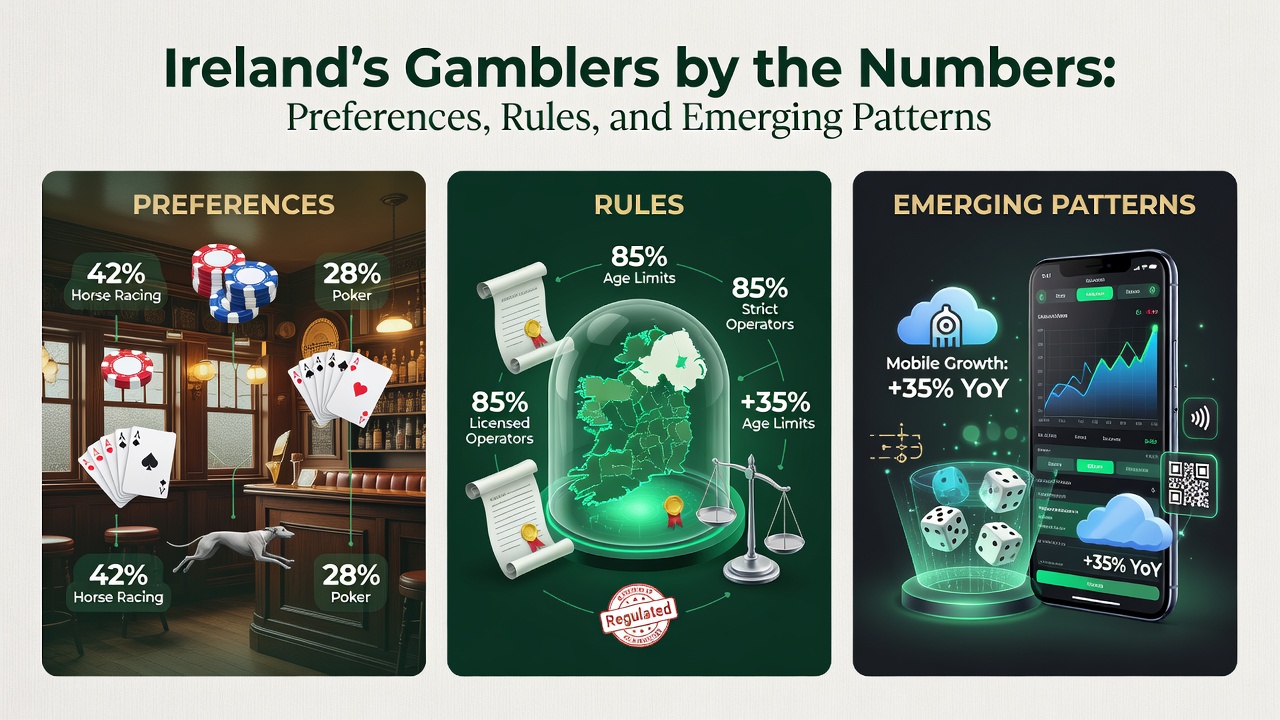
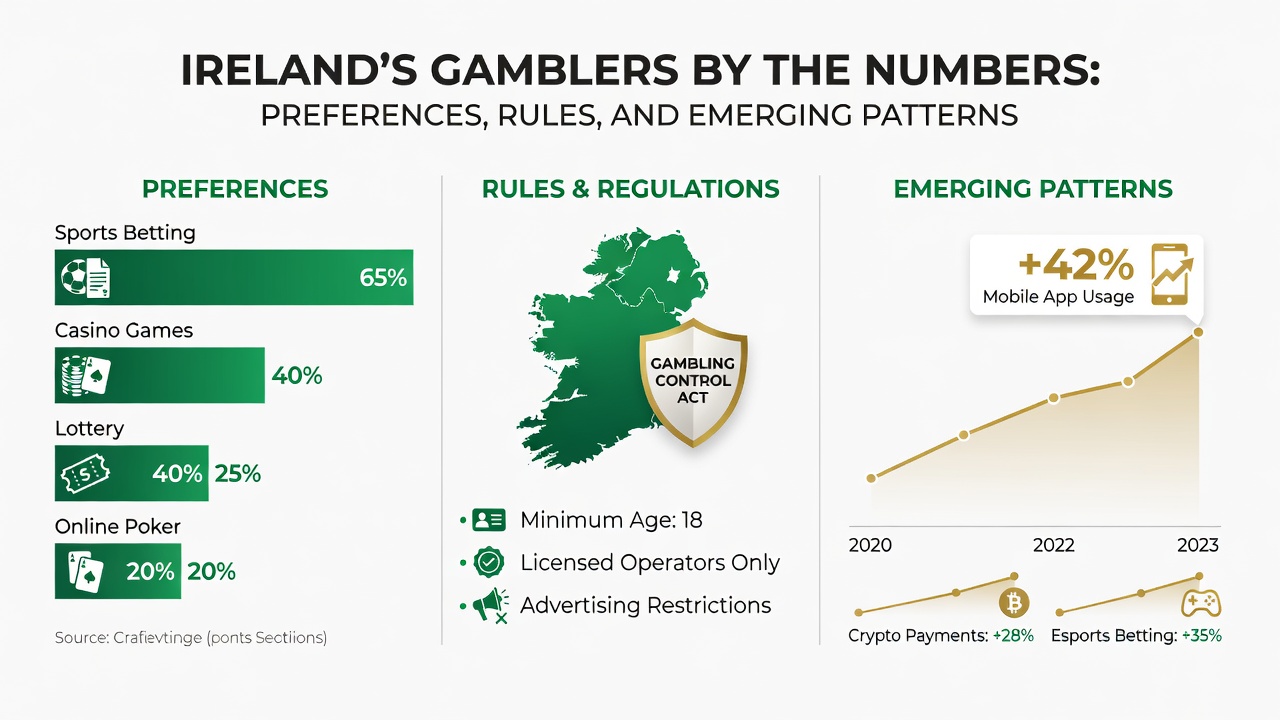
Irish gambling activity breaks down into measurable categories that researchers track through annual surveys and licensing records, with participation rates hovering around 65 percent of adults in recent data releases from national statistical agencies. Preferences cluster around sports betting and lottery draws during peak seasons, while slot machines and casino table games draw steady but smaller shares according to industry reports compiled by European gaming associations. Rules governing these activities stem from the 2015 Criminal Justice Act amendments that set the minimum age at 18 for all forms of commercial gambling and require operators to maintain strict advertising standards monitored by the Office of the Revenue Commissioners.
Participation Numbers and Demographic Breakdowns
Figures from the most recent national health and lifestyle surveys indicate that men between 25 and 44 account for the largest segment of regular bettors, yet female participation in online lottery and bingo formats has risen steadily since 2022, narrowing the overall gender gap to roughly 10 percentage points. Average monthly spend per active player sits near €45 when calculated across all formats, though sports bettors in urban areas report higher figures that reach €70 during major tournament periods. Observers note that rural residents show stronger loyalty to traditional bookmakers and licensed premises, whereas city dwellers shift more activity to mobile applications that allow real-time wagering on live events.
Regulatory Framework and Compliance Requirements
Current Irish law mandates that all remote gambling platforms hold a license issued under the forthcoming Gambling Regulation Act provisions scheduled for full rollout in phases through late 2026, with October 2026 marking the deadline for existing operators to complete transition to the new single licensing regime. Operators must implement age-verification tools that cross-reference government databases and provide self-exclusion options accessible within three clicks on any interface. Revenue collection from gambling activities contributes approximately €200 million annually to the exchequer, with tax rates differentiated by product type: 1 percent on sports betting turnover and 2 percent on casino game gross gaming revenue. These structures align with broader EU directives on consumer protection while leaving room for national enforcement priorities.
Preferences Across Game Types and Channels
Sports betting dominates preferences among Irish adults, capturing nearly 40 percent of total gambling expenditure according to data aggregated by trade groups that represent licensed bookmakers across the European Union. Horse racing and football matches generate the highest volumes, followed by rugby internationals and golf tournaments that attract seasonal spikes. Casino games, particularly roulette and blackjack variants, appeal more to the 35-plus demographic, while younger players gravitate toward slots with progressive jackpots and instant-win scratch card formats. Lotteries remain the most inclusive option, drawing participants from every income bracket and age group above the legal threshold.
Emerging Patterns in Technology and Behavior
Mobile platforms now handle over 75 percent of remote wagering volume, a shift documented in operator submissions to regulatory bodies and corroborated by independent market analyses from research institutions in Canada and Australia that track similar jurisdictions. In-play betting features have gained traction since their wider introduction in 2023, allowing users to adjust wagers during matches rather than placing single pre-event stakes. Cashless payment methods, including digital wallets and instant bank transfers, account for the majority of deposits, reducing reliance on traditional card transactions that previously dominated the market. Those who have studied transaction logs observe that session lengths on mobile devices average 12 minutes shorter than desktop sessions, suggesting quicker decision cycles and higher frequency of smaller bets.
Regional differences continue to appear in the data, with Dublin and Cork showing elevated adoption of live dealer casino streams while western counties maintain higher volumes through physical lottery retail outlets. Problem gambling indicators tracked by health services remain stable at approximately 2.5 percent of the adult population, prompting targeted awareness campaigns that run alongside new responsible gambling toolkits required under updated licensing conditions. Cross-border play with Northern Ireland operators adds another layer, as differing tax and regulatory environments create measurable traffic patterns during major sporting events.
Market Data Trends Through 2026
Projections compiled ahead of the October 2026 regulatory milestone estimate that remote gambling turnover will surpass €3 billion for the first time, driven by expanded product offerings and improved connectivity in previously underserved areas. University-led studies from institutions in the Netherlands have compared Irish patterns with those in other EU member states and found similar trajectories in mobile migration yet distinct preferences for locally regulated sports markets. Industry associations continue to publish quarterly dashboards that break down these figures by age cohort and product type, giving policymakers clearer visibility into behavioral shifts as the new licensing framework takes effect.
Conclusion
The numbers paint a picture of steady evolution rather than abrupt change, with core preferences for sports and lotteries holding firm while technology reshapes how and where people place their wagers. Regulatory updates scheduled for October 2026 will standardize licensing across channels and reinforce consumer safeguards already embedded in current practice. Data from multiple sources, including government statistical releases and cross-national research collaborations, provides the factual foundation for understanding these dynamics without speculation about future outcomes.