Ireland's Remote Gambling Surge: Regulatory Milestones, Player Demographics, and Market Data Trends
Iris Griffin · Sep 10, 2026
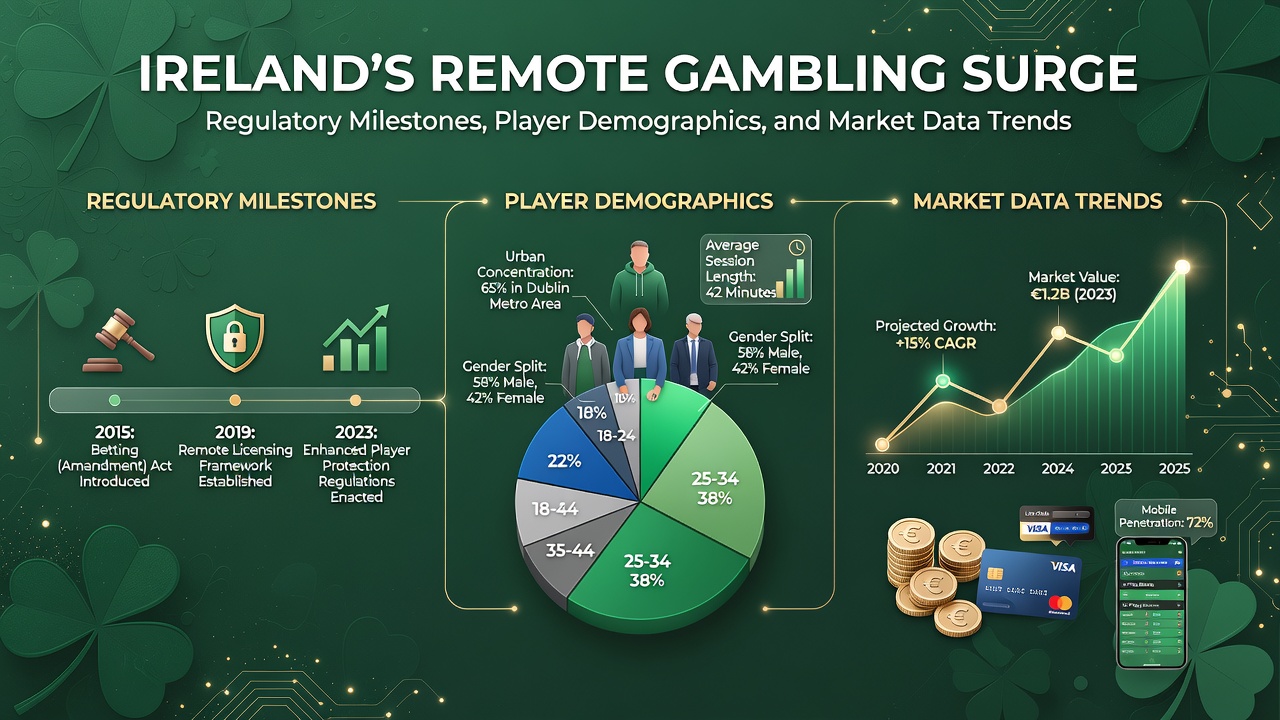
Ireland has seen steady expansion in remote gambling activity over the past decade as digital platforms gained wider access and regulatory structures evolved to keep pace. Data from government and industry sources shows participation rates climbing across multiple age brackets, while revenue figures reflect consistent year-over-year growth tied to both mobile adoption and updated licensing rules. Observers note that these shifts have unfolded alongside broader European trends in online entertainment, yet Ireland maintains distinct policy timelines that continue to shape operator requirements and player protections.Regulatory Milestones That Shaped the Sector
Key legislative steps began with the Betting Act of 1931 and progressed through later updates that addressed internet-based operations. The Gambling Control Act of 2015 introduced clearer definitions for remote betting and gaming, establishing oversight mechanisms under the Revenue Commissioners. Subsequent amendments refined advertising standards and introduced mandatory age verification protocols that operators must follow when serving Irish residents.
Further developments arrived in 2022 when the government advanced plans for a dedicated gambling regulator. Draft legislation outlined licensing categories for remote operators along with provisions for responsible gambling tools such as deposit limits and self-exclusion registers. These measures align with EU directives on consumer protection while addressing local concerns around problem gambling prevalence. A new licensing framework is scheduled to begin in September 2026, according to official timelines released by the Department of Justice.
Player Demographics Across Age Groups and Regions
Market research indicates that remote gambling participation in Ireland spans urban and rural populations, with the highest engagement among adults aged 25 to 44. Figures from national surveys reveal that roughly 28 percent of this cohort reports occasional online betting or casino activity, compared with 15 percent in the 45 to 64 range. Younger adults between 18 and 24 show moderate involvement at around 12 percent, often favoring mobile slots and esports betting markets.
Gender distribution remains uneven, with men accounting for approximately 62 percent of active remote players based on transaction data compiled by payment processors. Regional patterns show stronger uptake in Dublin and other major cities, though participation in smaller counties has risen as broadband coverage improved. Studies from academic institutions such as those published through Trinity College Dublin highlight correlations between disposable income levels and frequency of play, noting that higher earners tend toward sports betting while mid-income groups prefer casino-style games.
Market Data Trends and Revenue Patterns
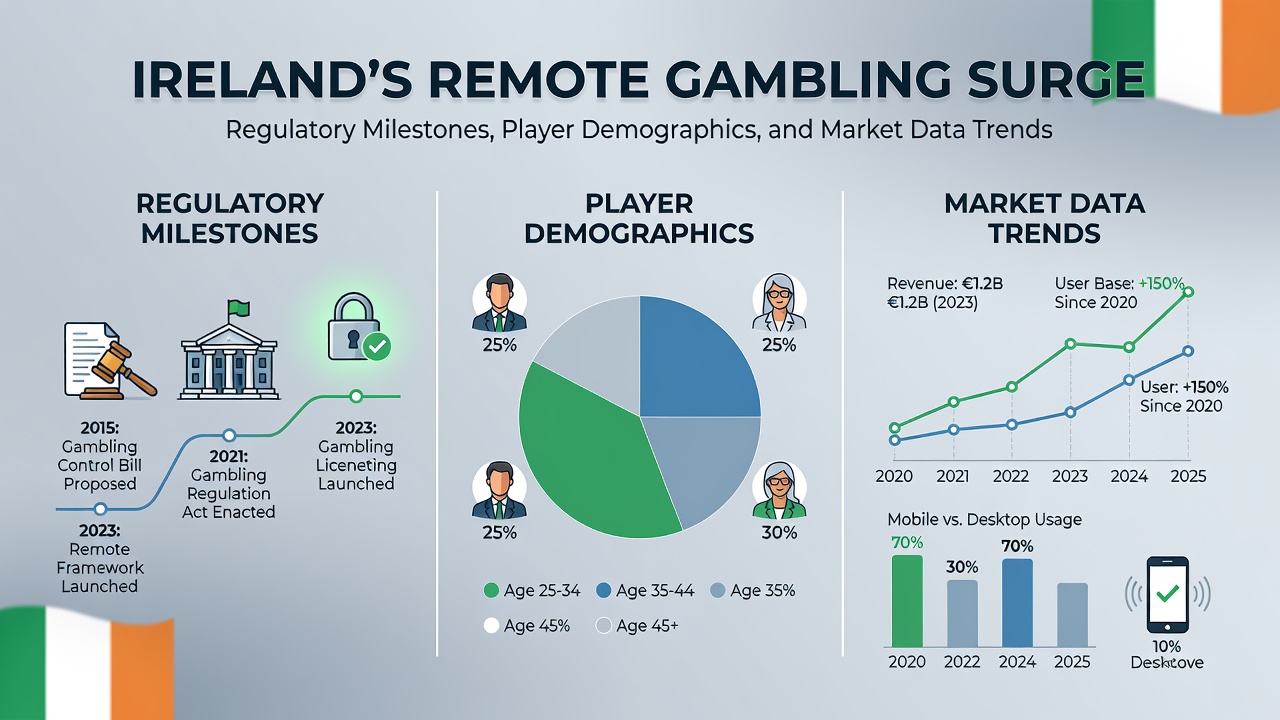
Revenue reports compiled by the Irish government demonstrate that remote gambling gross gaming revenue reached approximately €450 million in the most recent fiscal year, up from €320 million five years prior. Sports betting continues to represent the largest segment at 55 percent of total remote activity, followed by online casino games at 30 percent and poker at 10 percent. Mobile devices now facilitate over 70 percent of all remote gambling sessions according to operator-submitted statistics.
International comparisons drawn from reports by the Canadian Gaming Association and research papers from Australian universities illustrate similar growth trajectories in markets with comparable regulatory frameworks. Irish operators have expanded partnerships with global game providers, resulting in increased variety of titles available to local players. Payment method trends show rising use of e-wallets and instant bank transfers, which now handle nearly 65 percent of deposits, while credit card usage has declined slightly amid stricter verification rules.
Market analysts tracking quarterly data note that promotional offers such as matched deposits and free spins drive initial sign-ups, yet retention rates depend more heavily on game selection and payout speed. Industry organizations including the European Gaming and Betting Association have published position papers emphasizing the role of standardized reporting in maintaining market transparency across member states.
Conclusion
The combination of updated regulations, shifting player profiles, and measurable revenue growth paints a clear picture of Ireland's remote gambling landscape as it moves toward the September 2026 licensing rollout. Continued monitoring by regulatory bodies and independent researchers will provide further insight into how these elements interact over time, offering data points that inform both policy adjustments and operator strategies without speculation on future outcomes.